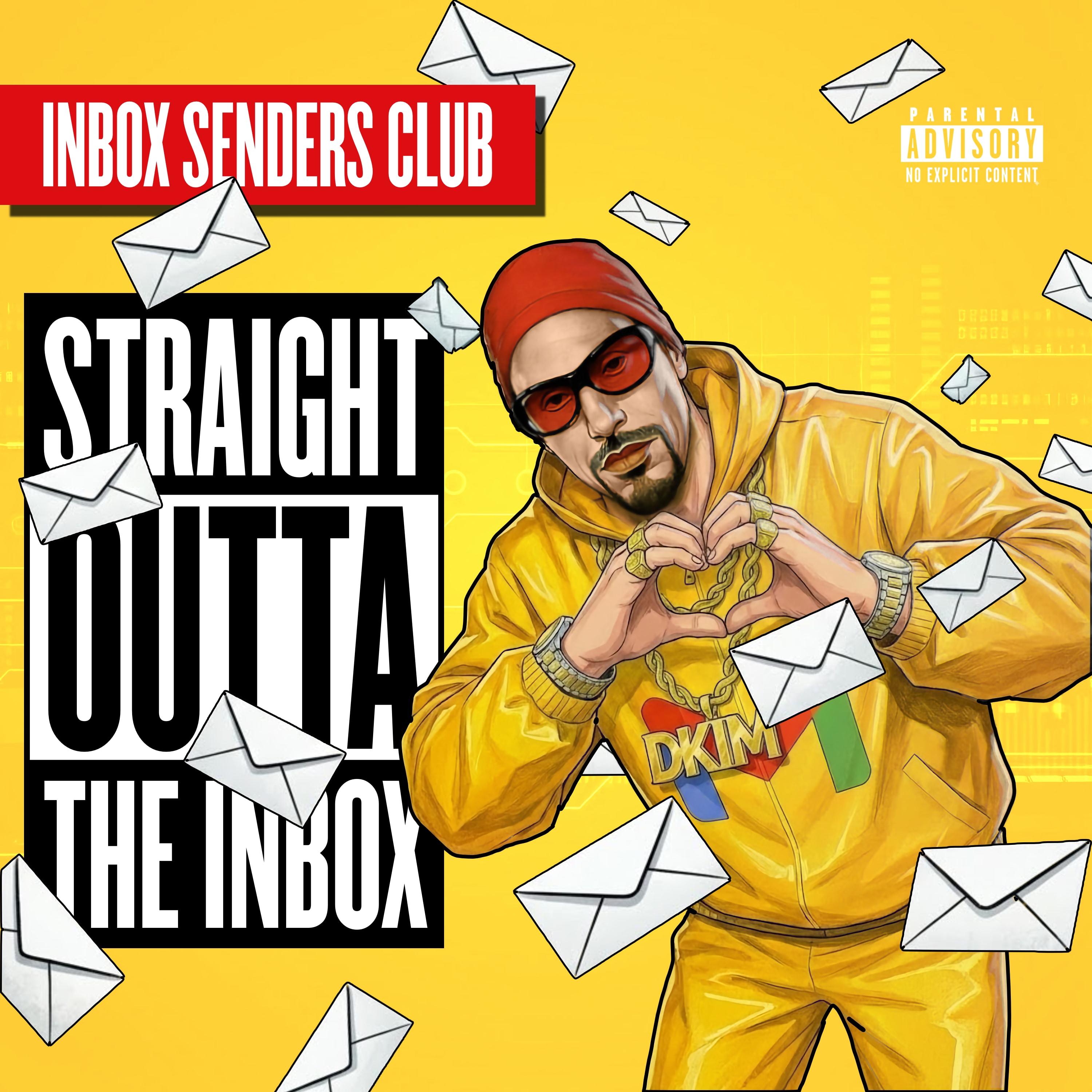
Deliverability Case Study: "Ali G(mail) vs. Da Reality of Sender Authentication"
This parody is a masterclass in deliverability dunning-kruger. Ali G(mail) believes his name alone — a homophone of the very algorithm filtering his mail — grants him divine inbox placement. In reality, he's the archetypal sender who confuses confidence with configuration. Let's break down where Ali's swagger meets the unforgiving math of modern mailbox providers.
Verse 1: Authentication Ignorance and Folder Placement
"You got your SPF, your DKIM... (Confused) whatever dat is / ... / Your email goes to 'Promotions' Or even worse, da bin!"
The Deliverability Context: Ali dismisses SPF (Sender Policy Framework) and DKIM (DomainKeys Identified Mail) as alphabet soup, but since February 2024, Google and Yahoo's bulk sender requirements make both mandatory* for any sender pushing more than 5,000 messages per day to their users. No DKIM signature means no inbox — full stop.
Promotions vs. Bin: The song correctly distinguishes Gmail's tab sorting (Promotions) from outright spam foldering ("da bin"). Promotions tab placement is not* a deliverability failure — it's category classification based on content and engagement patterns. Spam folder placement, however, indicates a reputation or authentication problem flagged by Gmail's ML filters.
- The Open Rate Trap: Ali mocks marketers checking open rates, and ironically he's half-right. Since iOS 15's Mail Privacy Protection (MPP), open rates are heavily inflated by pre-fetching. Click-through rate (CTR) and click-to-open rate (CTOR) are now the more reliable engagement signals.
Verse 2: The "Al-Gore-Rhythm" Fallacy and Opt-In Reality
"I don't need no 'double opt-in' / When dey see me name, dey just let me in"
- The Deliverability Context: This is the song's biggest technical fiction. Mailbox providers have no concept of "names that just get let in." Gmail's filtering is driven by domain reputation (visible in Google Postmaster Tools as Bad/Low/Medium/High), IP reputation, authentication results, and per-user engagement signals — none of which care about the sender's clout.
- Correction on Double Opt-In: Skipping confirmed opt-in is precisely how senders end up hitting pristine spam traps (addresses that never opted in, planted by Spamhaus and others to catch list buyers) and recycled traps (abandoned addresses reactivated to catch poor hygiene). One trap hit can tank domain reputation for weeks.
The Primary Tab Myth: "How you always in da Primary Tab?"* — Primary tab placement on Gmail is determined by a recipient's individual interaction history (replies, stars, moves from Promotions to Primary). It's personalised, not universal. No sender is "always" in everyone's Primary tab.
Bridge & Outro: A/B Testing Dismissal and the "From" Field Delusion
"All you man wit your 'A/B testin'... Wot is dat? / ... / So if you want your email read... Just put 'From: Ali G' instead."
- The Deliverability Context: A/B testing isn't optional vanity — it's how senders optimise subject lines, send times, and content to drive engagement, which directly feeds reputation. Gmail's spam rate threshold is 0.10% (warning) and 0.30% (severe filtering). Without testing, you fly blind into those thresholds.
The From-Header Spoofing Problem: Ali's suggestion to simply set "From: Ali G"* is, technically, exactly what phishers attempt — and exactly what
DMARC was built to defeat. With a DMARC policy of
p=quarantine or
p=reject enforced on the
From: domain, spoofed headers fail alignment checks and get binned. The "name in the From field" carries zero weight without authenticated, aligned identifiers behind it.
- The Real Strategy: Ali's confidence is the inverse of good practice. Real inbox placement comes from authenticated infrastructure, list hygiene (suppress hard bounces immediately, sunset unengaged subscribers at 90–120 days), one-click unsubscribe per RFC 8058, and complaint rates kept below 0.10%.
Ali G(mail) is a cautionary tale: charisma doesn't authenticate, and the algorithm shares his name but not his loyalty. Booyakasha!
Think you can just slap "From: Ali G" on your campaigns and rocket "straight to da top" of the Primary tab? Respek to the confidence, but the actual Al-Gore-Rhythm — Gmail's machine learning filter — doesn't care about your name. It cares about authentication, engagement signals, and complaint rates. Here is how to genuinely crack the code without relying on celebrity branding or wishful thinking.
Prove You Is Who You Say You Is (Authentication)
Ali G assumes his name is enough. Gmail assumes nothing — it demands cryptographic proof of identity on every message.
- Configure SPF Correctly: Sender Policy Framework (SPF) lists the IP addresses authorized to send on your domain's behalf. Watch the 10-DNS-lookup limit defined in RFC 7208 — exceeding it triggers a permerror and authentication fails silently. Use
-all (hardfail) once you're confident in your sending sources, not ~all (softfail).
- Sign with DKIM (2048-bit): DomainKeys Identified Mail attaches a cryptographic signature to every message, verified via a public key in your DNS. Use 2048-bit keys — 1024-bit is now considered weak — and rotate selectors at least annually.
- Enforce DMARC with Alignment: Domain-based Message Authentication, Reporting, and Conformance (DMARC) ties SPF and DKIM to your visible "From" domain. Start at
p=none to monitor via rua reports, then progress to p=quarantine and ultimately p=reject. Since February 2024, Gmail and Yahoo require at least p=none with proper alignment for bulk senders.
Da Primary Tab Ain't About Your Name
Ali claims he lands in Primary because he's "the original G." In reality, tab placement is driven by recipient behavior and content signals — not sender ego.
- Earn Engagement, Don't Demand It: Gmail's filter watches reply rates, archive-without-reading patterns, and "Move to Primary" actions. Highly transactional or one-to-one style messages tend to land in Primary; heavy promotional templates with multiple CTAs and tracking pixels typically route to Promotions, which is normal and not a deliverability failure.
- Watch Your Complaint Rate Like a Hawk: Google Postmaster Tools is the source of truth. Stay below 0.10% user-reported spam rate; crossing 0.30% triggers severe filtering or outright blocking. Apple Mail Privacy Protection has inflated open rates since iOS 15, so lean on click-through rate (CTR) and click-to-open rate (CTOR) as honest engagement signals.
Yes, You Do Need Double Opt-In (Sorry, Ali)
"I don't need no double opt-in" is exactly how senders end up hitting spam traps and getting Spamhaus-listed. Permission is the foundation of every other best practice.
- Implement Confirmed Opt-In: A confirmation click verifies the address is real and consensual, dramatically reducing typo traps and malicious signups. This is required under GDPR (EU) and strongly recommended under CAN-SPAM (US) and CASL (Canada).
- Validate Cold or Imported Lists: Before sending to any list you didn't grow organically, run it through a real-time verification service like ZeroBounce, NeverBounce, or Kickbox. This catches hard-bounce addresses and known spam traps before they destroy your sender reputation.
- One-Click Unsubscribe (RFC 8058): Gmail and Yahoo's 2024 bulk sender requirements mandate the
List-Unsubscribe header with List-Unsubscribe-Post: List-Unsubscribe=One-Click. Skipping this is a fast track to the spam folder, regardless of how charming your "From" name is.
Test Like You's "A" or "B" — It Actually Matters
Ali dismisses A/B testing, but mailbox providers reward senders who continuously refine for engagement.
- Test Subject Lines and Send Times: Split a small percentage of your list, measure CTR (not just opens, thanks to MPP), and roll out the winner. Even 5–10% lifts compound into meaningful reputation gains over months.
- Seed-Test Inbox Placement: Tools like GlockApps or Validity provide inbox placement rate (IPR) across major providers — distinct from your ESP's delivery rate, which only measures server acceptance, not folder placement.
Conclusion
Ali G might think his name opens every inbox, but real deliverability is built on authentication, permission, and engagement — not personal branding. Treat every send as evidence presented to a skeptical algorithm, and the Primary tab becomes earnable rather than mythical.
Your Straight-To-Da-Top Checklist:
- Configure SPF (within 10 lookups), 2048-bit DKIM, and DMARC with alignment — progressing toward
p=reject.
- Implement RFC 8058 one-click unsubscribe to meet Gmail/Yahoo 2024 bulk sender rules.
- Monitor Google Postmaster Tools daily; keep spam complaint rate below 0.10%.
- Use confirmed opt-in and validate any imported lists before sending.
- Sunset unengaged subscribers at 90–120 days to protect your engagement ratios.
- Measure CTR and CTOR instead of opens, and seed-test inbox placement quarterly.
Educational content. Email deliverability evolves rapidly. Platform rules (Gmail, Yahoo, etc.), engagement signals, and ESP behaviours change frequently, and real-world issues often involve conflicting signals, data quality problems, and failure modes that general best practices can’t anticipate. Content on this site is provided for informational purposes only and does not replace a thorough analysis by a qualified deliverability professional.
Terms of Use