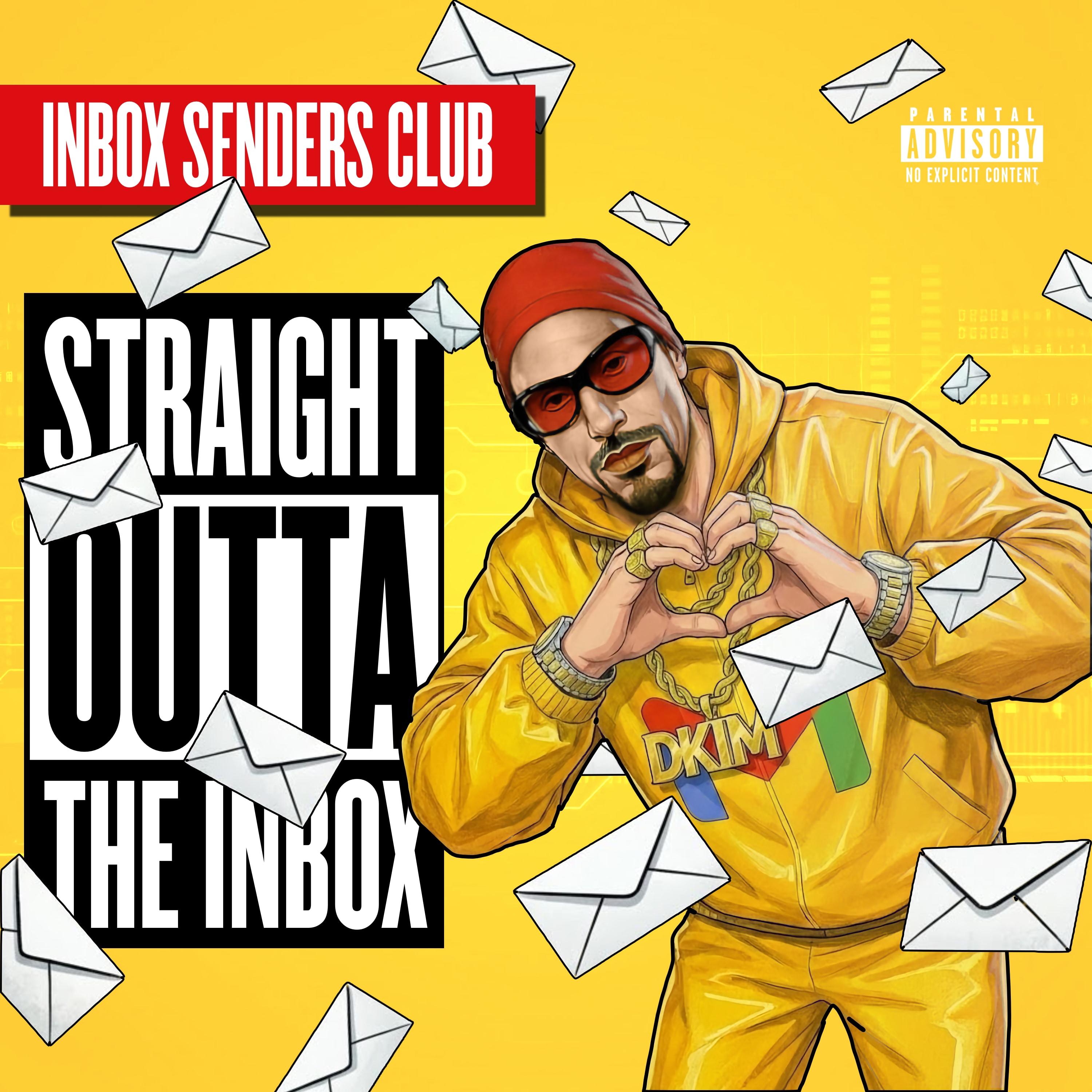
Deliverability Case Study: "Ali G(mail) vs. Da Algorithmic Oppressors"
This parody perfectly captures the adversarial relationship many senders feel they have with mailbox providers. Ali G(mail) represents the well-meaning but perhaps overly aggressive marketer who has to learn that modern spam filtering isn't just about what you say, but how you say it and who you are.
Here is the technical breakdown of the deliverability battles and algorithmic "oppressions" detailed in the song:
Verse 1: Content Filtering and the "Spammy" Aesthetic
"Lookin’ for 'FREE!!!' or 'WIN!!!' like me some scam crew / ... / It judge me colors, me fonts, me layout choice / It even hate me GIFs"
The Deliverability Context: Ali G(mail) is running headfirst into legacy content filters (like SpamAssassin) and modern machine learning algorithms. Using words like "FREE!!!" in all-caps with multiple exclamation points is a classic heuristic spam trigger. Furthermore, filters absolutely do* judge layouts. A poor text-to-image ratio (too many GIFs, not enough text), erratic font sizes, or using red/green text can trigger spam points.
Correction on "Yo": The lyric "Gmail block me just cuz me used 'yo'"* is a slight misconception. Gmail doesn't block based on a single slang word. However, AI filters use Bayesian poisoning and semantic analysis; if "yo" is heavily associated with user complaints across the network, it lowers the overall content score.
The Fix: "So me polish me headers"* refers to the technical foundation. No matter how clean your content is, if your
SPF,
DKIM, and
DMARC headers aren't "polished" (properly configured), the filters will drop the message.
Verse 2: URL Reputation and DMARC Alignment
"It check me URLs like me smuggling contraband / ... / It think every sender guilty ‘til proven clean"
The Deliverability Context: Mailbox providers scan every hyperlink in an email against blocklists (like SURBL or URIBL). If Ali G(mail) is linking to a domain with a poor reputation, or using a public URL shortener (like bit.ly) which is heavily abused by scammers, the email will be blocked regardless of the sender's own reputation. The line "guilty ‘til proven clean"* is the absolute golden rule of modern deliverability. IPs and domains have no inherent trust; they start neutral-to-bad and must earn the right to the inbox.
The Strategy: "Segment me list so da filter mellow / ... / Me headers aligned in mysterious ways"* shows immense growth. Segmenting lists to send only to engaged users boosts open rates, which "mellows" the filter's suspicion. "Headers aligned" is a direct reference to
DMARC alignment, ensuring the "From" domain perfectly matches the domain authenticated by SPF and DKIM.
Verse 3: IP/Domain Warming and Metrics
"Scan me sender rep like a stalker wid no chill / 'Engagement too low? Bounce rate high? Kill.'"
- The Deliverability Context: Here, the song hits on the ultimate holy trinity of sender reputation: Engagement, Bounce Rate, and Spam Complaints. If engagement (opens/clicks) is low, filters assume the mail is unwanted graymail. If the bounce rate is high (sending to dead email addresses), it signals terrible list hygiene. Both metrics will "kill" a campaign.
The Resolution: "But me domain fight back — me warm it day by day / ... / Remove dodgy lines, polish every draft"* describes
Domain Warming. You cannot blast a million emails on day one. You must start with a small volume of highly engaged users and slowly increase it day by day to prove to ISPs that your traffic is safe, legitimate, and desired by the recipients.
Ali G(mail) successfully transitions from a spammy sender complaining about algorithms to a "deliverability warrior" employing best practices—proving that good sender behavior always beats the filter. Booyakasha!
Feeling like your emails are constantly battling algorithmic oppressors? Many marketers find their carefully crafted campaigns banished to the spam folder due to hidden technical missteps or algorithmic triggers. Here is how you can transform from a suspected spammer into a deliverability warrior and secure your rightful spot in the primary inbox.
Authenticate Your Identity (The "Polished Headers")
Inbox providers operate on a strict "guilty until proven clean" policy. If you cannot mathematically prove you are who you say you are, algorithms will block your emails to protect their users.
- Implement SPF and DKIM: Sender Policy Framework (SPF) acts as a guest list, telling servers which IP addresses are allowed to send emails on your behalf. DomainKeys Identified Mail (DKIM) adds a digital signature to your emails, ensuring the message wasn't tampered with in transit.
- Enforce DMARC Alignment: Domain-based Message Authentication, Reporting, and Conformance (DMARC) ties SPF and DKIM together. It instructs the receiving server on what to do if an email fails authentication. Achieving DMARC alignment—where your "From" domain exactly matches the authenticated domain—is non-negotiable for modern inbox placement.
- Adopt BIMI for Brand Trust: Brand Indicators for Message Identification (BIMI) is a current standard that displays your verified, trademarked logo next to your message in the inbox. It requires strict DMARC enforcement and instantly boosts subscriber trust and open rates.
Content is King, but Context is Emperor
Legacy spam filters looked for "spammy" words in all-caps, but modern AI-driven filters analyze semantic context, sender history, and structural formatting.
- Design for Accessibility (Not Just Algorithms): While a low text-to-image ratio won't inherently trigger modern spam filters, relying entirely on large images or GIFs is a massive barrier for accessibility. Screen readers cannot interpret text embedded in images, meaning visually impaired subscribers will receive a blank or confusing experience. Furthermore, designing accessible emails with proper HTML text and descriptive alt tags is now a strict legal requirement in many jurisdictions, including the EU.
- Audit Your URLs: Mailbox providers scan every link in your email against URI blocklists. Linking to domains with poor reputations or using public link shorteners (like bit.ly) can tank your deliverability, regardless of your domain's own clean reputation.
- Write for Humans, Not Algorithms: Avoid hyper-aggressive sales language, but don't overcorrect. Filters use Bayesian analysis to see how users interact with your specific vocabulary. If your audience constantly engages with your slang or unique tone, the algorithm will learn that your content is desired.
Master Engagement and List Hygiene
Mailbox providers like Gmail and Yahoo closely monitor how recipients interact with your emails. High engagement signals that your mail is wanted, while high bounce rates or spam complaints will act as a swift algorithmic death sentence.
- Leverage AI-Assisted Segmentation: Stop blasting your entire list. Use AI tools to segment your audience based on their engagement history, purchase behavior, and website activity. Sending highly relevant emails to smaller, targeted segments significantly boosts open rates and "mellows" the filter.
- Monitor Gmail Postmaster Tools: This free tool is essential for any sender. It provides direct insights into your domain reputation, IP reputation, spam complaint rate, and authentication errors directly from Google's perspective.
- Prune Unengaged Subscribers: Holding onto dead weight ruins your sender ratio. Implement sunset policies to automatically remove or suppress users who haven't opened an email in the last 90 to 120 days.
The Art of Domain and IP Warming
You cannot build trust overnight. Whether you are migrating to a new Email Service Provider (ESP) or launching a new dedicated IP, you must prove your worth incrementally.
- Start Slow and Steady: Domain warming involves sending a very small volume of emails to your most highly engaged subscribers first.
- Scale Methodically: Day by day, slowly increase your sending volume. This patient approach proves to Internet Service Providers (ISPs) that your traffic is legitimate and that you are not a compromised network attempting a sudden spam attack.
Conclusion
Conquering the spam filter nemesis isn't about using sneaky tricks to bypass algorithms; it is about fundamentally proving that you are a legitimate, responsible sender whose content is actively desired by recipients. By aligning your technical infrastructure, maintaining pristine list hygiene, and delivering relevant content, you can master your inbox flow.
Your Deliverability Warrior Checklist:
- Verify SPF, DKIM, and DMARC alignment are fully configured and passing.
- Check your domain and IP reputation using Gmail Postmaster Tools (will soon be decommissioned unfortunately).
- Remove public URL shorteners from all email templates.
- Segment your list to prioritize users who have engaged within the last 90 days.
- Establish a sunset policy to automatically remove chronic non-openers.
Educational content. Email deliverability evolves rapidly. Platform rules (Gmail, Yahoo, etc.), engagement signals, and ESP behaviours change frequently, and real-world issues often involve conflicting signals, data quality problems, and failure modes that general best practices can’t anticipate. Content on this site is provided for informational purposes only and does not replace a thorough analysis by a qualified deliverability professional.
Terms of Use