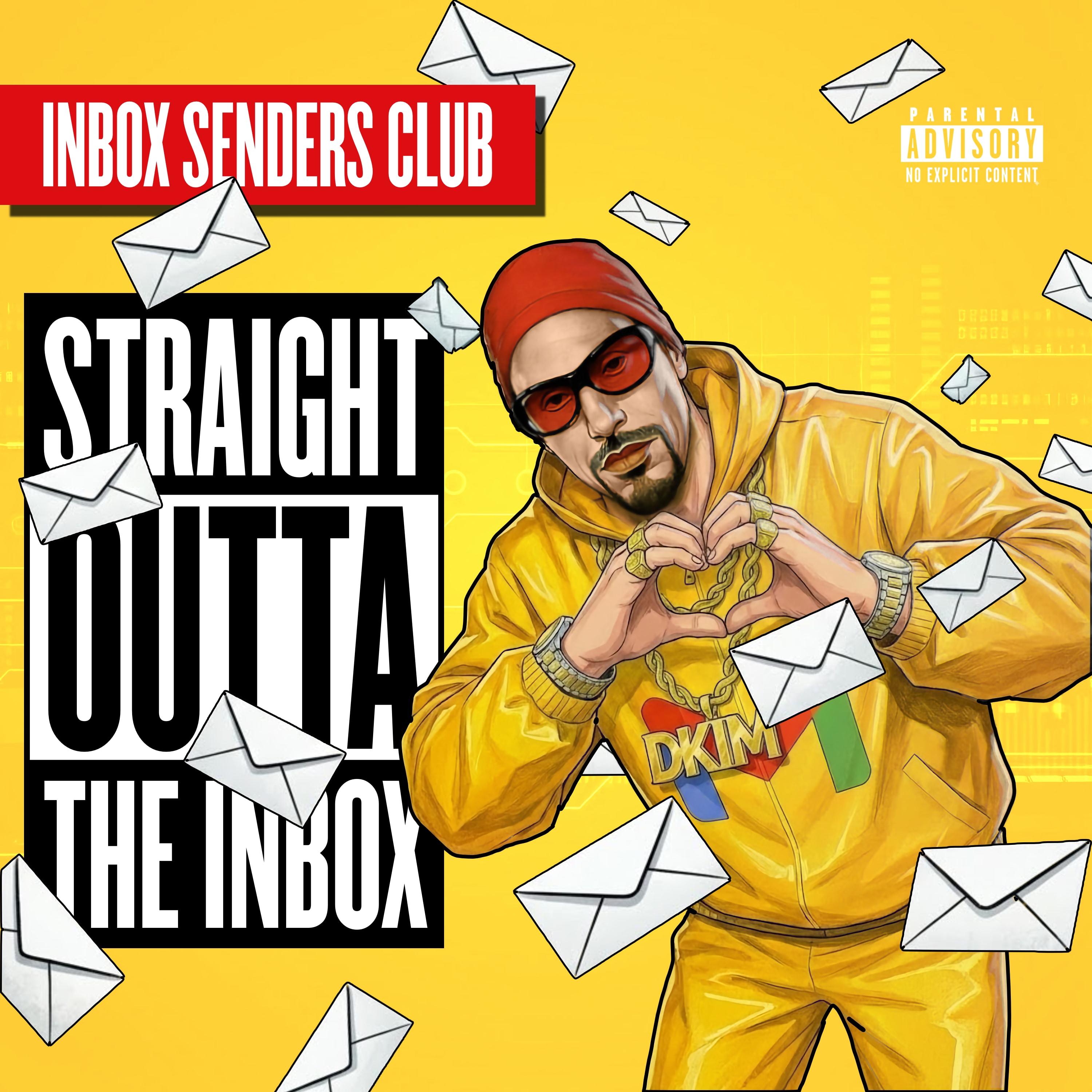
Deliverability Case Study: "Ali G(mail) vs. Da Junk Folder Sentence"
This parody captures the existential dread of every email marketer who has watched their carefully crafted campaign vanish into the abyss of the spam folder. Ali G(mail) personifies the sender stuck in filtering purgatory — not quite blocked, not quite delivered, just... filed away. The song journeys from victimhood ("dey tried to bin me") to redemption ("inbox freedom is certain"), and the technical lessons along the way are surprisingly on-point.
Here's the deliverability breakdown of Ali G(mail)'s spam folder saga:
Verse 1: Content Filtering and Suppression Lists
"Dey labelled me 'phishy' just 'cause me subject line said 'Hey u' / ... / Me ends up rotting next to 'Hot Singles In Your Area' on da side / ... / But me rise from suppression lists like Jesus on a Monday"
- The Deliverability Context: "Hey u" is a textbook subject line pattern flagged by Bayesian content filters because phishing campaigns historically rely on lowercase, informal, conversational hooks to bypass corporate filters. Ali G(mail) sitting next to "Hot Singles In Your Area" is a perfect metaphor for neighborhood reputation — when your messages land in the same folder as known spam, ML classifiers learn to associate your sending patterns with that cohort.
Correction on Suppression Lists: The lyric "me rise from suppression lists like Jesus on a Monday"
is technically backwards — rising from* a
suppression list is exactly what destroys reputation. Suppression lists exist to permanently remove hard bounces (550 errors), unsubscribes, and complainers. Resurrecting suppressed addresses is one of the fastest ways to hit recycled spam traps and earn a Spamhaus listing.
The 100-Email Plan: "I got a 100-email plan"
— ironically, this is* good advice. Starting with low daily volume (200–500 sends) to your most engaged subscribers is the foundation of proper IP warmup.
Verse 2: Domain Reputation, Throttling, and Content Triggers
"Me domain rep low, but me swagger high like Heathrow flights / Tryna warm up me sendin', but dey throttle out me nights / Dey scan me text for naughty words like 'FREE,' 'CLICK,' 'WIN'"
- The Deliverability Context: Low domain reputation in Google Postmaster Tools (Bad/Low) directly triggers throttling — receiving servers respond with 421 4.7.0 deferrals, forcing your MTA to retry with exponential backoff. Ali G(mail) is experiencing the classic warmup squeeze: trying to scale volume while ISPs deliberately rate-limit untrusted senders.
The Trigger Words: "FREE," "CLICK," "WIN"
are legacy SpamAssassin heuristics. Modern Gmail filtering relies less on individual keywords and more on the combination* of language patterns, link reputation (SURBL/URIBL checks), and historical engagement.
The Authentication Boast: "Dey can
DMARC me,
SPF me,
DKIM test me soul"* — Ali G(mail) is correctly identifying the authentication trinity, but authentication alone doesn't earn the inbox. It's table stakes; reputation does the rest.
Bridge & Verse 3: Authentication Alignment vs. Reputation
"Me SPF aligned… me DKIM shiny… me DMARC on fleek… / Yet you still treat me like some wasteman newsletter from 2003"
The Hard Truth: This is the most technically important moment in the song. Ali G(mail) has perfect authentication (SPF aligned, DKIM signed, DMARC enforced) and still* lands in spam. Why? Because since February 2024, Gmail and Yahoo's bulk sender requirements made authentication
mandatory but insufficient. You must also maintain a
complaint rate below 0.10% (0.30% triggers severe filtering) and implement RFC 8058 one-click unsubscribe via the List-Unsubscribe-Post header.
The Resolution: "Me bounce back like soft bounces on a Sunday night / Retry me send and suddenly everything right"* — soft bounces (4xx codes) should be retried with exponential backoff for up to 72 hours, then suppressed after 3–5 consecutive failures. Persistence within reason is rewarded; blind retry storms are not.
- The Final Lesson: Junk folder placement isn't a permanent sentence. Consistent engagement, list hygiene, and patience rebuild domain reputation over 4–8 weeks. Ali G(mail)'s phoenix metaphor is apt — but only if he stops resurrecting suppressed addresses.
Booyakasha!
Feeling like Ali G(mail) — locked up in the junk folder, shouting "RESPEK!" at algorithms that refuse to let you through? You're authenticated, you're aligned, you're spitting fire — and yet Gmail still treats you like a dodgy newsletter from 2003. The truth is, escaping the spam gutter isn't about volume or swagger; it's about proving to mailbox providers that your messages are wanted, trusted, and technically legitimate. Here's how to rise from the
suppression list and claim your inbox crown.
Get Your Headers Polished (Authentication is Non-Negotiable)
Ali G(mail) brags that his "SPF aligned, DKIM shiny, DMARC on fleek" — and honestly, that's the bare minimum in 2024. Without authentication, you're not even in the conversation.
- Lock Down SPF Without Breaking It: Sender Policy Framework (SPF) declares which IPs can send on your domain's behalf. Watch the 10-DNS-lookup limit — exceeding it triggers a permerror that fails SPF entirely, even if your sending IP is listed. Audit your
include: mechanisms regularly as you add ESPs.
- Sign with 2048-bit DKIM: DomainKeys Identified Mail (DKIM) cryptographically signs your messages. Use 2048-bit keys (1024-bit is considered weak), rotate selectors at least annually, and ensure your
d= domain aligns with your From domain for DMARC purposes.
- Enforce DMARC Beyond p=none: Monitoring mode (
p=none) is just training wheels. Move to p=quarantine with a pct= ramp, then p=reject. Use rua reporting (via Postmark, Dmarcian, or Valimail) to catch unauthorized senders before tightening policy.
- Earn Your BIMI Logo: Brand Indicators for Message Identification (BIMI) requires enforced DMARC (
p=quarantine or p=reject) plus a Verified Mark Certificate (VMC). It's the visual RESPEK Ali G(mail) is begging for.
Stop Triggering the Posh Magistrate (Content & Compliance)
The song complains about filters scanning for "FREE," "CLICK," "WIN" — but modern filters are far more sophisticated than keyword bingo. They evaluate context, structure, and sender history holistically.
- Honor One-Click Unsubscribe: As of February 2024, Gmail and Yahoo require bulk senders (5,000+/day) to support RFC 8058 one-click unsubscribe via the
List-Unsubscribe-Post header. Ali G(mail)'s unsubscribe link may swing smooth like gold chains, but it also needs to be programmatically actionable.
- Audit Every URL: Mailbox providers check links against SURBL, URIBL, and Spamhaus DBL on every send. One compromised shortener or affiliate link can tank an otherwise pristine campaign — never use bit.ly or public shorteners in bulk mail.
- Mind Your Complaint Rate: Gmail's threshold is 0.10% (warning) and 0.30% (severe filtering). Google Postmaster Tools is the source of truth — if you're flirting with 0.10%, you're already in trouble, no matter how hot your bars are.
Don't Get Stuck Next to "Hot Singles" (List Hygiene)
Ali G(mail) ends up "rotting next to Hot Singles In Your Area" because the junk folder doesn't discriminate. Pristine list hygiene is what separates legitimate senders from the spam gutter massive.
- Suppress Hard Bounces Immediately: A 5xx response means permanent — never retry. ISPs flag senders who repeatedly hammer dead addresses, and exceeding ~2% bounce rate triggers throttling across major providers.
- Handle Soft Bounces with Backoff: 4xx responses (421, 450, 451) deserve exponential retry, but suppress after 3–5 consecutive failures or 72 hours in queue. Don't let your MTA hammer a deferring server forever.
- Implement Sunset Policies: Suppress subscribers with no engagement for 90–120 days. Run a re-engagement campaign first — but if they don't bite, let them go. Recycled spam traps live among your unengaged segment.
- Validate Cold Lists: Before importing any list older than 6 months, run it through ZeroBounce, NeverBounce, or Kickbox. Pristine spam traps (addresses that were never opted in) are the fastest path to a Spamhaus listing.
Warm Up Like You Mean It (The Phoenix Rise)
Ali G(mail)'s "100-email plan" needs structure. New IPs and new domains both need independent warmup — reputation is built in increments, not bursts.
- Ramp on Engaged Subscribers First: Start at 200–500/day to your most engaged segment, then double every 2–3 days. High open and click rates during warmup tell ISPs your traffic is wanted.
- Separate Marketing and Transactional Subdomains: Send marketing from
mail.brand.com and transactional from brand.com. Reputation isolation means a campaign misstep won't kill your password reset deliverability.
- Monitor Reputation in Real Time: Watch Google Postmaster Tools daily during warmup, plus Microsoft SNDS for Outlook/Hotmail IP status. Yellow or red status demands an immediate volume pullback.
Conclusion
Ali G(mail) escapes the junk folder not through swagger, but through discipline: aligned authentication, ruthless list hygiene, compliant unsubscribe handling, and patient warmup. The inbox isn't a battle against unfair algorithms — it's a long-term reputation game where consistency earns RESPEK. Show the filters you're legitimate, and they'll stop treating you like a wasteman newsletter.
Your Junk Folder Escape Checklist:
- Confirm SPF passes within the 10-lookup limit, DKIM uses 2048-bit keys, and DMARC is at
p=quarantine or stronger.
- Implement RFC 8058 one-click unsubscribe via
List-Unsubscribe-Post header.
- Keep Gmail Postmaster Tools complaint rate under 0.10% and bounce rate under 2%.
- Suppress hard bounces immediately and unengaged subscribers at 90–120 days.
- Validate any cold or imported list before sending to avoid pristine spam traps.
- Warm new IPs and domains incrementally on your most engaged segment first.
Educational content. Email deliverability evolves rapidly. Platform rules (Gmail, Yahoo, etc.), engagement signals, and ESP behaviours change frequently, and real-world issues often involve conflicting signals, data quality problems, and failure modes that general best practices can’t anticipate. Content on this site is provided for informational purposes only and does not replace a thorough analysis by a qualified deliverability professional.
Terms of Use