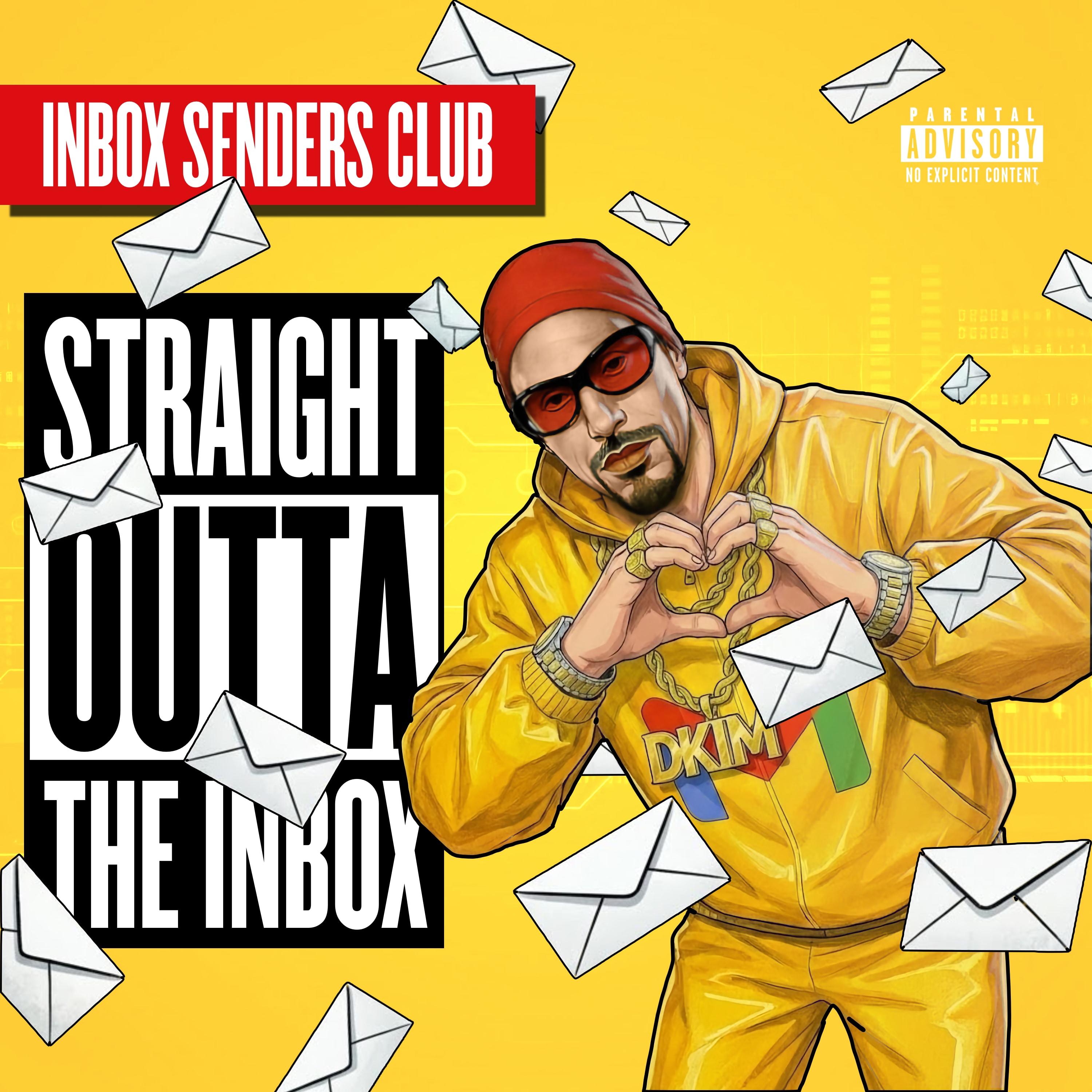
Deliverability Case Study: "Ali G(mail) vs. Da Art of Lettin' Go"
This parody addresses one of the most counterintuitive truths in email marketing: unsubscribes are good for you. Most senders treat the unsubscribe rate as a vanity metric to minimize, hiding the link, adding friction, or worse — ignoring requests entirely. Ali G(mail) flips the script and treats unsubscribes as a feature of healthy list hygiene, not a bug. This is the mindset that separates senders with 99% inbox placement from those stuck in the spam folder.
Here is the technical breakdown of the list hygiene wisdom hidden in the verses:
Verse 1: One-Click Unsubscribe and the 2024 Bulk Sender Era
"No tiny grey links hidin' in da dead of night / No guilt-trip text sayin' 'Are you REALLY sure?' / Just a clean one-click — simple and pure"
- The Deliverability Context: Ali G(mail) is directly referencing the Gmail and Yahoo bulk sender requirements that took effect February 2024. Senders pushing 5,000+ messages/day to these providers must implement RFC 8058 one-click unsubscribe via the
List-Unsubscribe-Post: List-Unsubscribe=One-Click header. Hiding the link in 8pt grey text on a grey background, or forcing users through a multi-step confirmation flow, is now actively penalized.
The Anti-Dark-Pattern Tactic: "No guilt-trip text"* calls out manipulative confirmation flows. When users can't easily unsubscribe, they hit the "Report Spam" button instead — and that complaint is roughly 100x more damaging to reputation than a clean unsubscribe.
- The Threshold to Remember: Gmail's spam complaint thresholds are 0.10% (warning zone, filtering begins) and 0.30% (severe filtering / blocking). Every "Report Spam" click that should have been an unsubscribe pushes you closer to that cliff.
Verse 2: Unsubscribes as Feedback and the Sacred Inbox
"unsubscribes be feedback, fam — a truth you gotta know / Maybe me message too long… maybe too hype / Maybe me subject line read like a desperate type"
- The Strategy: Unsubscribe rate is one of the most diagnostic metrics on the dashboard. A spike following a specific campaign is direct subscriber feedback on subject line, frequency, or content relevance. Senders should tag unsubscribes by campaign in their ESP and treat sustained increases as a content audit trigger.
The Fix: "Me unsubscribe page be cleaner than a spa / Big bold button like 'Go in peace, bruh.'"
— Best practice is a single-page unsubscribe with one prominent button. Optional preference centers (frequency reduction, topic selection) can appear after* honoring the request, never as a barrier to it.
- Suppression Discipline: Once unsubscribed, that address must be added to a permanent suppression list immediately. CAN-SPAM requires honoring requests within 10 business days; GDPR and CASL effectively require immediate action.
Bridge & Verse 3: Sunset Policies and List Decay
"So me focus on da ones who vibe da most / Not clingin' to ghosts like desperate host / When da list stay clean — engagement climb"
- The Deliverability Context: Ali G(mail) is describing sunset policies — the practice of suppressing unengaged subscribers before they decay into dead weight. Industry standard is to suppress recipients with no opens or clicks in 90–120 days, ideally after a re-engagement campaign.
The Trap Risk: "Clingin' to ghosts"* is more dangerous than it sounds. Abandoned mailboxes get reactivated by ISPs as
recycled spam traps, typically after 6–12 months of inactivity. Hitting even a handful tanks
domain reputation in Google Postmaster Tools and can trigger Spamhaus listings.
The Resolution: "Engagement climb"* reflects mailbox provider math. Gmail's ML filters weight
engaged-recipient ratio heavily — sending to 100,000 people where 30% engage beats sending to 500,000 where 6% engage, every single time. A smaller, cleaner list literally delivers better.
Ali G(mail) ends the song where every mature sender eventually arrives: respecting the recipient's choice protects the sender's reputation. The unsubscribe link isn't your enemy — it's the bouncer keeping spam complaints out of your house. Booyakasha!
Watching subscribers walk out the door can feel like a personal rejection, but in deliverability terms, an unsubscribe is a gift. Every person who leaves voluntarily is a person who
didn't hit the spam button — and spam complaints, not unsubscribes, are what destroy your sender reputation. Ali G(mail) said it best: better one loyal fan than a thousand who reject. Here's how to honor the exit and protect your
inbox placement at the same time.
Make the Door Wide Open (One-Click or Bust)
If your unsubscribe process feels like an escape room, your subscribers will choose the "Report Spam" button instead — and that single click does exponentially more damage than a clean opt-out.
- Implement RFC 8058 One-Click Unsubscribe: As of February 2024, Gmail and Yahoo require bulk senders (5,000+ messages/day) to support one-click unsubscribe via the
List-Unsubscribe and List-Unsubscribe-Post: List-Unsubscribe=One-Click headers. This lets recipients opt out directly from the inbox UI without a confirmation page. Skip this and your mail gets filtered to spam — full stop.
- Honor Unsubscribes Within 48 Hours: CAN-SPAM legally requires processing within 10 business days, but modern best practice (and GDPR/CASL compliance) is near-immediate suppression. Any sends to a user who unsubscribed yesterday will likely trigger a spam complaint today.
Skip the Guilt Trip: No "Are you really sure?" multi-step gauntlets, no required login, no "tell us why" mandatory fields. Optional feedback surveys after* the unsub is fine — anything that delays the exit is a complaint waiting to happen.
Treat Complaints Like Code Red
The complaint rate is the single most important deliverability metric you don't directly control — and it's the reverse image of unsubscribe respect.
- Stay Below 0.10% Complaint Rate: Per Google's bulk sender guidelines, exceeding 0.10% spam complaints in Postmaster Tools triggers warnings and degraded inbox placement. Hit 0.30% and you're looking at severe filtering or outright blocks across Gmail. Yahoo enforces similar thresholds.
- Enroll in Every Available Feedback Loop: Yahoo, Comcast, Fastmail, and Microsoft (via JMRP) provide ARF-formatted complaint reports when users mark your mail as spam. Auto-suppress these addresses immediately — they are explicit "do not contact" signals stronger than an unsubscribe.
- Monitor Google Postmaster Tools Daily: GPT is your source of truth for Gmail complaint rate, domain reputation, and spam rate trends. A sudden spike usually precedes a deliverability collapse by 24-72 hours, giving you a window to pause sends and investigate.
Sunset the Ghosts Before They Haunt You
The subscribers who don't unsubscribe but also never engage are the most dangerous segment on your list — they decay into recycled spam traps and tank engagement signals.
- Implement a 90-120 Day Sunset Policy: If a subscriber hasn't opened, clicked, or interacted in 90-120 days, send a re-engagement campaign. If they don't respond, suppress them. Note: Apple Mail Privacy Protection (MPP) inflates open data, so weight clicks and site activity more heavily than opens.
- Watch for Recycled Spam Traps: ISPs reactivate abandoned mailboxes as recycled traps specifically to catch senders with poor hygiene. Hitting even a handful can land you on Spamhaus SBL or trigger Microsoft SNDS to flip your IP from green to red.
- Segment by Engagement Tier: Send your most frequent campaigns only to your engaged 30-day cohort. Less engaged segments get fewer, more relevant sends. This is how you keep your engagement ratio high without literally deleting subscribers on day one.
Bounces Deserve Respect Too
Hard bounces are the involuntary cousin of unsubscribes — and ignoring them signals to ISPs that you're not maintaining your list.
- Suppress Hard Bounces Immediately: A 5xx response (especially 550 "no such user") means the address is dead. Sending again confirms to the receiving ISP that you're not processing bounces — keep your hard bounce rate under 2% or expect filtering.
- Handle Soft Bounces with Backoff: 4xx responses (421, 450, 451) are temporary. Retry with exponential backoff for up to 72 hours, then suppress after 3-5 consecutive failures. Don't retry forever — that's spammer behavior.
Conclusion
Unsubscribing with respect isn't just ethical — it's the most under-appreciated deliverability lever you have. Every honored exit is a spam complaint avoided, every sunset suppression is a trap hit prevented, and every clean list is an inbox placement earned. RESPEK the choice, and the algorithms will RESPEK you back.
Your List Hygiene Checklist:
- Implement RFC 8058 one-click unsubscribe headers (
List-Unsubscribe-Post) on every bulk send.
- Process all unsubscribe requests within 48 hours and suppress permanently.
- Enroll in Yahoo, Microsoft JMRP, Comcast, and Fastmail feedback loops; auto-suppress all complainers.
- Monitor Gmail Postmaster Tools weekly to keep complaint rate below 0.10%.
- Sunset unengaged subscribers after 90-120 days with a re-engagement attempt first.
- Suppress hard bounces immediately and soft bounces after 3-5 consecutive failures.
Educational content. Email deliverability evolves rapidly. Platform rules (Gmail, Yahoo, etc.), engagement signals, and ESP behaviours change frequently, and real-world issues often involve conflicting signals, data quality problems, and failure modes that general best practices can’t anticipate. Content on this site is provided for informational purposes only and does not replace a thorough analysis by a qualified deliverability professional.
Terms of Use