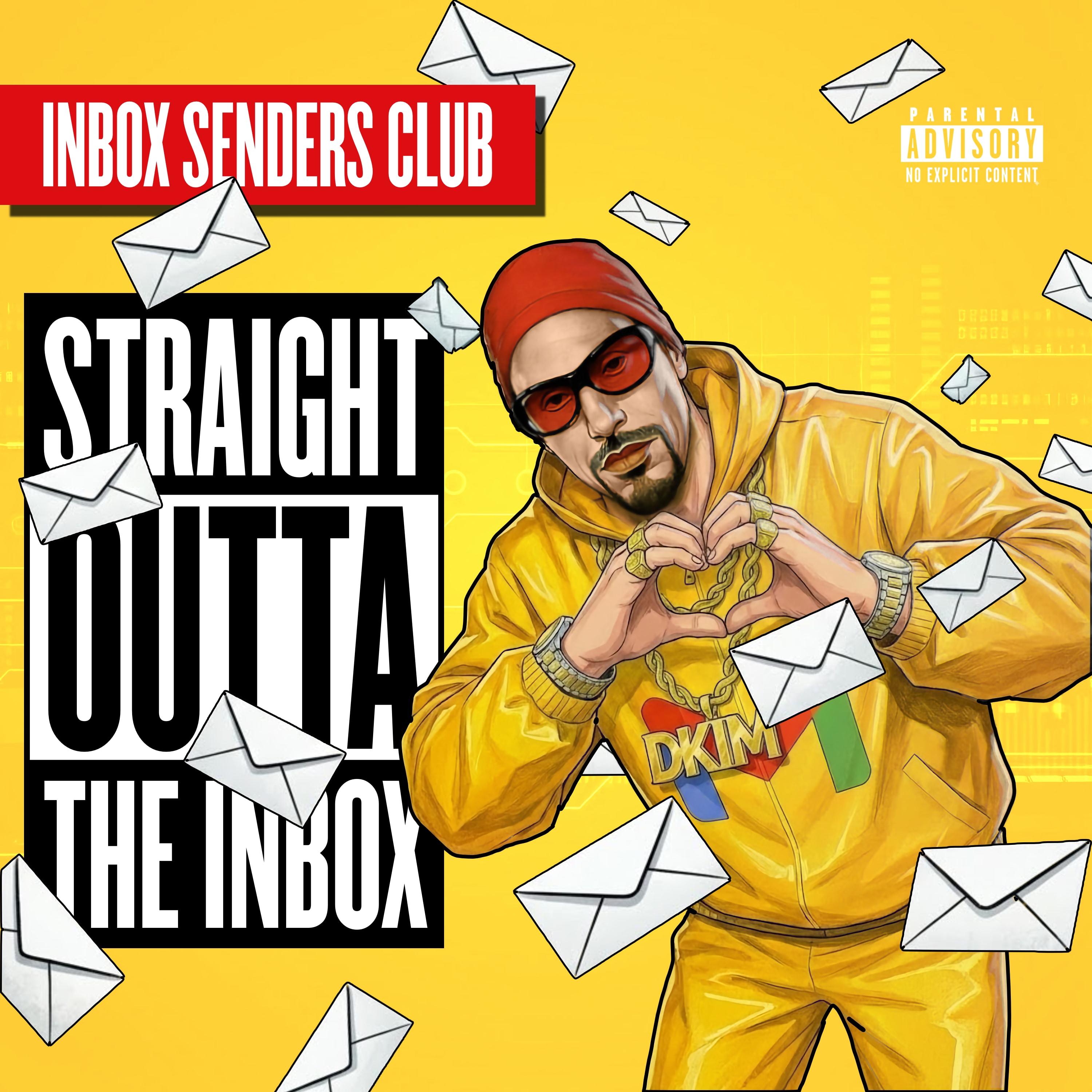
Deliverability Case Study: "Ali G(mail) vs. Da Batch-and-Blast Mandem"
This parody is a masterclass in why segmentation is no longer a "nice-to-have" — it's a core deliverability mechanic. Ali G(mail) has graduated from authentication basics into the strategic layer where engagement signals dictate inbox placement. In a post-2024 world where Gmail and Yahoo openly punish senders with complaint rates above 0.10%, sending the same message to your entire list is the fastest route to the spam folder. Here's the technical breakdown:
Verse 1: Cohort-Based Segmentation and Engagement Recency
"VIPs on da top shelf — dey get da special tune / New leads get warm vibes, nurtured afternoon / Engaged mandem get da spice — dem hottest in da set / Dormants get gentle poke — like 'Oi, you alive yet?'"
- The Deliverability Context: Ali G(mail) is describing engagement-based segmentation, the single most important lever for inbox placement at Gmail and Yahoo. Mailbox providers weight recent engagement (opens, clicks, replies, "move to inbox" actions) extremely heavily when scoring incoming mail. Sending the same broadcast to a 30-day engaged user and a 2-year dormant subscriber drags your reputation down to the level of the worst cohort.
- The Strategy — Tiered Cohorts:
VIPs / 0–30 day engaged:* Safe to send full volume; these recipients are your reputation shield.
New leads (0–14 days post-signup):* Highest open rates of any cohort — use them during IP warmup.
Dormants (90–120 days):* Quarantine into a
re-engagement track before the M3AAWG-recommended sunset point.
Verse 2: Suppression Logic and the Dead-Weight Problem
"Group D be da sleepers, silent like me ex / Me send dem slow drips, gentle nurture complex / No blasting dead crowds — nah fam, dat's pain / Spam filters smell dat madness like a broken drain"
- The Deliverability Context: "Blasting dead crowds" is exactly how senders hit recycled spam traps — abandoned addresses that ISPs have reactivated as honeypots. One pristine trap hit can land you on Spamhaus SBL; recycled trap hits at Microsoft will turn your SNDS status from green to red overnight.
- The Anti-Decay Tactic: Ali G(mail)'s "slow drip" approach is a textbook re-engagement campaign — reduce frequency to dormant cohorts, send a clear "do you still want to hear from us?" message, and suppress non-responders after 2–3 attempts.
Hard bounces:* Suppress immediately and permanently. Re-mailing them is the #1 cause of the 2% bounce-rate threshold breach.
Soft bounces:* Suppress after 3–5 consecutive failures with exponential backoff between retries.
Bridge & Verse 3: Data-Driven Sending and the Death of Spray-and-Pray
"Imagine sendin' da same email to everyone… dat like buyin' one deodorant for da whole family" … "I check opens, clicks, trends — like a chef wid spice / ... / No 'spray & pray' tactics in me empire's code"
The Deliverability Context: The Uncle Terry metaphor is genuinely accurate — broadcast sending averages your reputation across all recipient behaviors. If 70% of your list is unengaged, the engaged 30% suffer because Gmail's domain reputation score (visible in Google Postmaster Tools) reflects the whole* sending pattern.
- A Note on the "Opens" Metric: Ali G(mail) checks "opens, clicks, trends," but post-iOS 15 Apple Mail Privacy Protection (MPP) auto-fetches tracking pixels, inflating open rates dramatically. Click-through rate (CTR) and click-to-open rate (CTOR) are the trustworthy engagement signals for segmentation logic in 2024.
The Resolution: "Segmentation so clean it make algorithms bless"* — by sending only to recipients statistically likely to engage, Ali G(mail) raises his domain reputation in Postmaster Tools from Medium to High, drops his
complaint rate well below the 0.10% Gmail threshold, and earns inbox placement that batch-and-blast senders can only dream of. Booyakasha!
Still treating your subscriber list like one giant mailing tube and wondering why your open rates resemble a flatline? Ali G(mail) preaches the gospel of segmentation for good reason: mailbox providers reward senders who deliver relevant content to engaged recipients and punish those who batch-and-blast. Here's how to slice your list with surgical precision and turn engagement signals into deliverability gold.
Slice the List Like a Surgeon (RFM Segmentation)
Effective segmentation starts with understanding who actually wants to hear from you, then matching cadence and content to that reality.
- Build Engagement Tiers: Group subscribers by Recency, Frequency, and Monetary value (RFM) — or at minimum by recency of opens and clicks. VIPs (engaged in the last 30 days) should receive your highest-volume, highest-value sends, while dormant segments (90+ days inactive) need a fundamentally different approach.
- Separate Lifecycle Stages: New subscribers in their first 30 days should enter a dedicated welcome/onboarding stream — these are your warmest audiences and produce the strongest engagement signals to ISPs. Mixing them into your general broadcast list dilutes that signal and wastes the trust window.
- Isolate by Stream, Not Just Audience: Use subdomain separation (e.g.,
news.brand.com for marketing vs mail.brand.com for transactional) so reputation from one segment doesn't poison the other. Promotional sends to dormant users shouldn't drag down the domain reputation of your transactional receipts.
Feed the Algorithm Real Engagement Signals
Gmail and Yahoo's filtering systems are essentially engagement scorecards. The more positive interactions per send, the better your placement on every subsequent campaign.
- Prioritize Clicks Over Opens: Since Apple Mail Privacy Protection (MPP) launched with iOS 15, open rates are inflated by automated pre-fetching and no longer reliable as a primary engagement metric. Click-through rate (CTR) and click-to-open rate (CTOR) are far more honest signals — segment and target based on these instead.
- Send to Your Best First: When launching a campaign, send to your most engaged segment in the first wave. Strong early engagement teaches the receiving algorithms that your content is wanted, which improves placement for the lower-engagement segments that follow.
- Watch Google Postmaster Tools: Domain reputation (Bad/Low/Medium/High), spam rate, and authentication metrics are visible directly from Google's perspective. If your spam complaint rate creeps near 0.10%, you're in warning territory; 0.30% triggers severe filtering — segmentation is the fastest lever to pull it back down.
Don't Mail Uncle Terry the Same Deodorant (Tailored Cadence)
The bridge nails it: one message for everyone is one message for nobody. Cadence and content must flex with each segment's signals.
- Throttle Frequency by Engagement: Highly engaged subscribers can handle 2–4 sends per week; mid-tier engagement should drop to weekly; dormant users should receive at most a monthly nurture or re-engagement attempt. Over-mailing dormants is the single fastest path to spam complaints and trap hits.
- Run a Re-Engagement Campaign Before Suppression: Before sunsetting a 90-day inactive user, send a focused 2–3 email win-back sequence with a clear "still want to hear from us?" call to action. Anyone who clicks gets returned to active segments; everyone else moves to suppression.
- Honor One-Click Unsubscribe: Per RFC 8058 and the Gmail/Yahoo bulk sender requirements (effective February 2024), the
List-Unsubscribe-Post header with one-click functionality is mandatory for senders over 5,000/day. Make it easy to leave — a clean unsubscribe is infinitely better than a spam complaint.
Sunset the Sleepers (List Hygiene Discipline)
Holding onto unengaged subscribers feels safe but actively destroys deliverability. Recycled spam traps and chronic non-openers signal poor list hygiene to every major ISP.
- Suppress Hard Bounces Immediately: A hard bounce (5xx response, e.g., 550 5.1.1 "no such user") means permanent failure — keep mailing it and you'll hit recycled traps and exceed the ~2% bounce threshold that triggers ISP filtering. Suppress on first occurrence, no exceptions.
- Sunset at 90–120 Days: Subscribers who haven't opened or clicked in 90–120 days should move to a suppression state after a re-engagement attempt. This is the M3AAWG-recommended best practice and the strongest list hygiene lever available.
- Validate Before Importing: When onboarding a list from an event, integration, or CRM merge, run it through a validation tool (ZeroBounce, NeverBounce, Kickbox) to remove invalids and known traps before they hit your sending infrastructure.
Conclusion
Segmentation isn't a marketing optimization — it's a deliverability requirement. By matching content and cadence to engagement tier, honoring suppression rules, and feeding algorithms clean positive signals, you transform from a batch-and-blast desert wanderer into a precision sender the inbox actually welcomes.
Your Segmentation & Hygiene Checklist:
- Build engagement tiers based on recency of clicks (not just opens, post-MPP).
- Send each campaign to your most engaged segment first to seed positive signals.
- Throttle send frequency by tier — dormant users get monthly nurture, not daily blasts.
- Run a re-engagement sequence before sunsetting inactive subscribers at 90–120 days.
- Suppress hard bounces immediately and validate imported lists before sending.
- Monitor Gmail Postmaster Tools weekly to keep spam complaint rate below 0.10%.
Educational content. Email deliverability evolves rapidly. Platform rules (Gmail, Yahoo, etc.), engagement signals, and ESP behaviours change frequently, and real-world issues often involve conflicting signals, data quality problems, and failure modes that general best practices can’t anticipate. Content on this site is provided for informational purposes only and does not replace a thorough analysis by a qualified deliverability professional.
Terms of Use