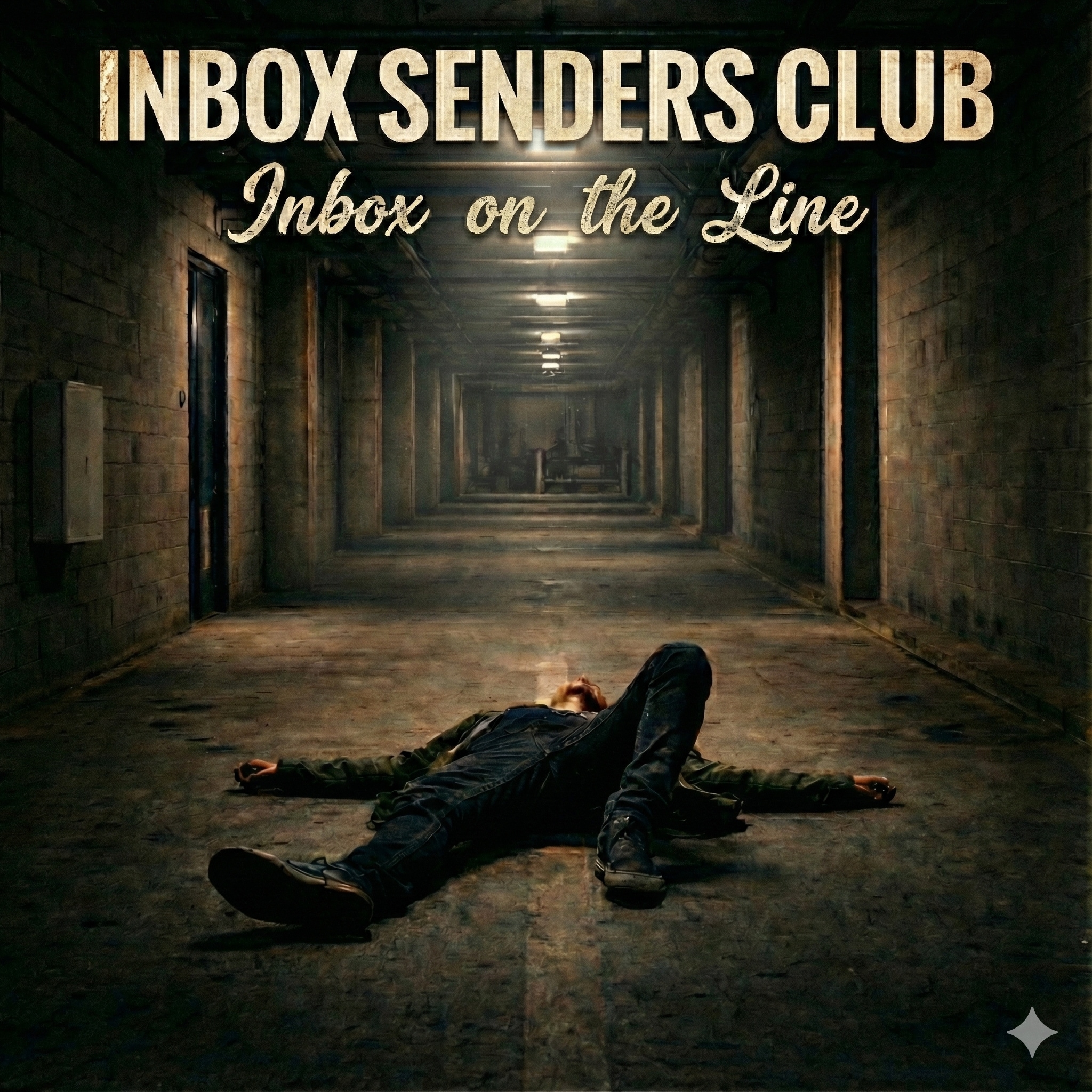
Deliverability Case Study: "Cadence Like a Heartbeat"
This song is a meditation, not a manifesto. The narrator has been through the panic sends, the midnight blasts, the desperate re-engagement Hail Marys — and come out the other side understanding something quieter: that ISPs and subscribers alike are pattern-recognition machines. They don't fall in love with volume. They fall in love with rhythm. What follows is the technical wisdom buried in the weariness.
Verse 1 & Verse 2: The Cost of Rushing the Send
"I learned too quick don't mean too smart / You rush the send, you stress the heart / They hear the knock before the sound / Too much too soon, they shut it down"
- The Hard Truth: Mailbox providers measure sending velocity the way a doctor measures a pulse — sudden spikes are a warning sign. A sender who jumps from 5,000 sends a day to 200,000 overnight without proper IP warmup will trigger rate limiting (421 4.7.0 responses) and reputation damage at Gmail and Microsoft well before the content is ever evaluated.
- The Deliverability Context: "They hear the knock before the sound" is exactly how filtering works at the connection layer. Before a single byte of your message body is read, the receiving MTA has already weighed your IP reputation, your domain reputation, your historical sending pattern, and your authentication results. The decision to defer or accept is largely made before "the sound" — the content — is even considered.
- The Lesson: Trust grows on a ramp, not a cliff. M3AAWG's sender best practices recommend doubling volume every 2–3 days during warmup, not because the math is magic, but because consistency is the only signal ISPs truly reward.
Chorus & Verse 3: Predictability as a Reputation Signal
"Inbox learns the shape of your name / Consistency keeps you in the game... Mondays got value, Fridays breathe / I leave some space for them to lean"
- The Reality: Gmail's Postmaster Tools domain reputation score (Bad / Low / Medium / High) is heavily influenced by sending consistency over rolling windows. A sender who emails Tuesday and Thursday every week for six months builds a pattern the filter recognizes. A sender who goes silent for three weeks and then blasts a "We Miss You!" campaign looks, statistically, like a compromised account or a list-buyer.
Cadence variance:* Wild swings in daily volume erode reputation even when content and engagement are good.
Day-of-week pacing:* "Mondays got value, Fridays breathe" reflects real engagement data — Tuesday through Thursday tends to outperform, but more importantly, the rhythm itself becomes part of the sender's fingerprint.
Verse 5 & Bridge: Frequency, Pursuit, and the Engagement Trap
"Frequency ain't volume, never was / It's showing up when you said you would / If they step back, I don't pursue / I slow the pulse, let interest move"
The Fix: When subscribers disengage, the wrong instinct is to send more* — to chase. The right instinct is to throttle. Sending to unengaged segments tanks your engagement metrics, and Gmail's filters weight 30/60/90-day engagement heavily when deciding inbox vs. spam folder placement.
- The Deliverability Context: This is the case for sunset policies and engagement-based segmentation. Suppress or downgrade subscribers who haven't opened or clicked in 90–120 days. Run a single re-engagement campaign before suppression — not a desperate sequence of seven.
The Bridge's Wisdom: "You can't surprise someone into loving you. You don't earn trust by showing up louder."* This is the entire philosophy of modern engagement-based filtering distilled into two lines. Volume is not affection. Frequency is not commitment. The inbox rewards the sender who is reliable, not the sender who is loud.
The senders who last are not the ones who shouted the loudest into the dark — they are the ones whose footsteps the inbox came to recognize, returning at the same hour, with the same care, until the door opened on its own.
Every sender learns it the hard way — usually after a campaign that felt urgent in the moment and looked desperate by morning. You can't rush your way into someone's inbox any more than you can rush your way into someone's life. The mailbox providers watch the rhythm of your sending the way an old friend notices when you only call when you need something. Cadence isn't a schedule. It's a promise you keep, quietly, until the algorithms — and the humans — start expecting you.
Read the Room Before You Read the Calendar
Engagement isn't about hitting send on Tuesday at 10am because some blog said so. It's about understanding which subscribers are leaning in and which are quietly stepping away.
- Segment by Engagement Recency, Not Just Demographics: Group your list by last open, last click, and last meaningful interaction — typically 0-30 days (active), 31-90 days (cooling), 91-120 days (at risk), and 120+ (dormant). Send your most frequent cadence to the active segment and pull back hard on the cooling and at-risk groups. Mailbox providers weigh engagement from your most recent sends most heavily, so protecting your engaged segment protects your reputation.
- Use Click and Reply Data Over Open Rates: Since Apple's Mail Privacy Protection (MPP) launched with iOS 15, opens are inflated by automated prefetching and no longer a reliable engagement signal. Lean on click-through rate (CTR), click-to-open rate (CTOR), replies, and on-site conversions to know who's actually listening.
- Let the Quiet Ones Stay Quiet: When a subscriber pulls back, slowing your cadence to them is a kindness and a strategy. Reducing frequency to disengaged segments lowers your complaint rate and protects inbox placement for the rest of the list.
Frequency Ain't Volume
The song says it plain: showing up loud isn't showing up well. Sending more doesn't earn more — it usually costs more.
- Establish a Predictable Baseline Cadence: Mailbox providers — particularly Gmail's machine learning filters — reward consistency in sending volume and timing. Wild swings (silence for three weeks, then a daily blast) look like compromised infrastructure or a list being burned, and filters react accordingly.
- Cap Frequency by Engagement Tier: Active subscribers might tolerate 3-5 emails a week; cooling subscribers should see 1 a week at most; at-risk should drop to monthly re-engagement only. This is how you keep your spam complaint rate below Gmail's 0.10% warning threshold and well clear of the 0.30% danger zone.
- Respect the Quiet Hours: Late-night sends, weekend blasts outside your normal pattern, and panic resends to non-openers all read as desperation to filters and to humans. If you said Thursday mornings, be there Thursday morning.
Sunset With Grace, Not Guilt
Holding onto subscribers who stopped caring is the fastest way to lose the ones who still do. The list you're afraid to prune is the list that's pruning your reputation.
- Run a Re-Engagement Sequence Before Suppression: At the 90-day inactivity mark, send a short 2-3 email win-back series with a clear value proposition and a one-click path to stay subscribed. Anything still silent at 120 days should move to suppression.
- Honor One-Click Unsubscribe (RFC 8058): Since February 2024, Gmail and Yahoo require bulk senders (5,000+ daily) to support the List-Unsubscribe and List-Unsubscribe-Post headers for true one-click removal. Make leaving easy — forced friction drives complaints, and complaints are far more damaging than unsubscribes.
- Watch the Recycled Spam Trap Risk: Long-dormant addresses get reactivated by mailbox providers as recycled traps specifically to catch senders with poor hygiene. Every dormant subscriber you keep "just in case" is a coin flip on a trap hit and a Spamhaus listing.
Conclusion
Cadence is trust made visible. The senders who last aren't the loudest — they're the ones whose rhythm the inbox learned to expect, and whose silence, when it comes, feels respectful rather than absent. Show up the same. Again. And again.
Your Engagement Cadence Checklist:
- Segment your list into active, cooling, at-risk, and dormant tiers based on recent engagement.
- Replace open rate as a primary KPI with CTR, CTOR, and reply data post-MPP.
- Set frequency caps per engagement tier and hold to a predictable sending schedule.
- Implement a re-engagement series at 90 days and suppress at 120 days of inactivity.
- Verify List-Unsubscribe and List-Unsubscribe-Post headers (RFC 8058) are live on every campaign.
- Monitor Gmail Postmaster Tools weekly to keep complaint rate below 0.10%.
Educational content. Email deliverability evolves rapidly. Platform rules (Gmail, Yahoo, etc.), engagement signals, and ESP behaviours change frequently, and real-world issues often involve conflicting signals, data quality problems, and failure modes that general best practices can’t anticipate. Content on this site is provided for informational purposes only and does not replace a thorough analysis by a qualified deliverability professional.
Terms of Use