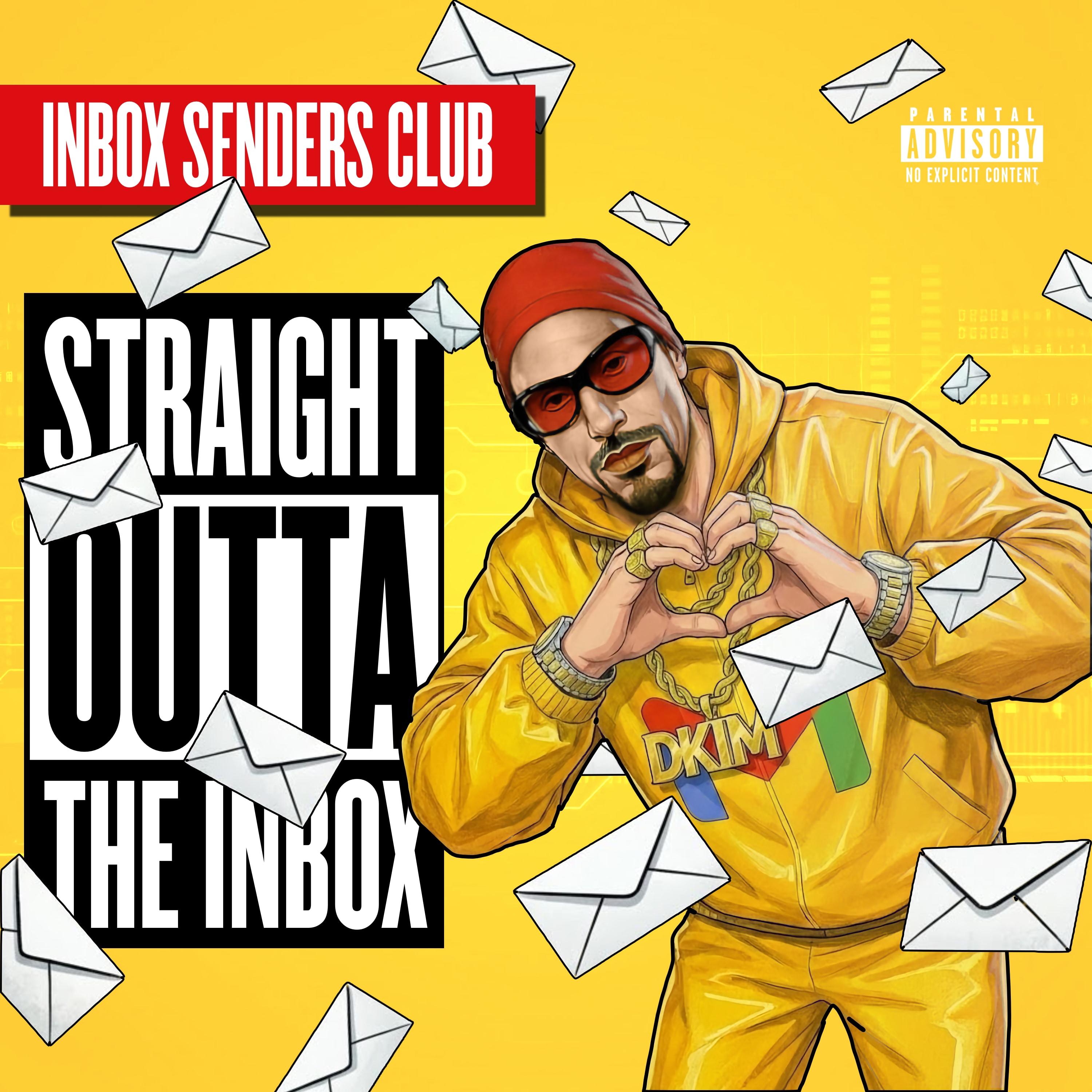
Deliverability Case Study: "Ali G(mail) vs. Da Quest for da BIMI Crown"
This parody celebrates the pinnacle of sender authentication: BIMI (Brand Indicators for Message Identification). Ali G(mail) isn't just trying to land in the inbox anymore — he's trying to land with his logo displayed beside his name. BIMI is the visible reward for years of authentication discipline, and this song captures the journey from "just a sender" to "verified royalty."
Here is the technical breakdown of the BIMI coronation detailed in the song:
Verse 1: BIMI as the Earned Badge
"BIMI be da badge dat you earn wid sweat / A visual check sayin' 'Bruv, you authenticate.' / ... / Had me alignment sharp and me DMARC tight"
- The Deliverability Context: BIMI is not a starter protocol — it's the capstone. To display your logo in supporting inboxes (Gmail, Apple Mail, Yahoo, Fastmail), you must already have DMARC enforcement in place at
p=quarantine or p=reject, with pct=100. A p=none policy will not qualify, no matter how clean your sending is.
- The "Alignment Sharp" Requirement: Ali G(mail) name-checks alignment for good reason. BIMI inherits DMARC's identifier alignment rules — your
From: domain must align with either an authenticated SPF domain or a DKIM d= signing domain. Without alignment, DMARC fails, and BIMI never even gets evaluated.
The Reward: "Now me brand pop out like a neon throne"* describes the actual user experience — the logo renders in the avatar slot of supporting clients, dramatically increasing brand recognition and (per Google's own studies) open rates.
Verse 2: The Authentication Stack Beneath the Crown
"You show up verified like a king reborn / Had to nail every signal from da ground to sky / SPF, DKIM all aligned on da fly / DMARC strong like a fortress gate"
The Deliverability Context: This verse correctly identifies BIMI as the final form* of a layered authentication stack. Each protocol does a specific job:
*
SPF (RFC 7208): Authorizes which IPs may send for your domain.
*
DKIM (RFC 6376): Cryptographically signs the message — 2048-bit keys are the current best practice; 1024-bit is considered weak.
*
DMARC (RFC 7489): Tells receivers what to do when SPF/DKIM fail and provides reporting via
rua= aggregate reports.
The Fortress Metaphor: "DMARC strong like a fortress gate / Protectin' me name from da fraud mandem hate"
is technically spot-on. DMARC's primary purpose is anti-spoofing — preventing phishers from impersonating your exact domain. BIMI then visually* signals to recipients that the protection is in place.
Bridge & Verse 3: VMC, Brand Identity, and the Visible Throne
"It be me rep, me hustle, me authentication journey... / ... / It da brand identity dat make me technique / ... / A royal emblem in da deliverer field"
- The Missing Piece — VMC: The song doesn't explicitly mention it, but for Gmail and Apple Mail to display the logo, you need a Verified Mark Certificate (VMC) issued by an authorized Certificate Authority (currently DigiCert or Entrust). The VMC proves you legally own the trademark on the logo. Without a VMC, Yahoo and Fastmail may still display, but Gmail/Apple will not.
- The Logo Format: BIMI logos must be in SVG Tiny Portable/Secure (SVG P/S) format — not standard SVG. This is a stripped-down profile published in the BIMI specification, hosted at an HTTPS URL referenced in your
default._bimi.yourdomain.com TXT record alongside the VMC URL (a= tag).
The Brand Lift: "No more blendin' in wid da crowd so wide"* captures the real ROI — in a stack of 50 inbox messages, the one with a logo gets noticed. BIMI converts authentication hygiene into measurable brand visibility.
Ali G(mail) ascends from a generic sender to a verified, logo-displaying brand authority — proving that BIMI isn't a vanity feature, but the visible crown awarded to senders who've mastered the full SPF/DKIM/DMARC stack. Booyakasha!
Tired of your brand getting lost in a sea of generic sender icons and grey placeholder circles? That little logo in the inbox isn't just decoration — it's a hard-earned signal of trust that takes months of authentication discipline to unlock. Here's how to claim your
BIMI crown and stand tall like Ali G(mail) in the inbox throne room.
Lock Down the Authentication Trinity
Before BIMI (Brand Indicators for Message Identification) will even glance at your logo, you need bulletproof authentication. The three core protocols must all align — no shortcuts, no half-measures.
- Publish a Tight SPF Record: Sender Policy Framework (SPF, RFC 7208) declares which IPs can send for your domain. Audit your
include: mechanisms regularly — every SPF lookup counts toward the 10-DNS-lookup limit, and exceeding it triggers a permerror that breaks authentication entirely. Use -all (hardfail) once you're confident in your sending sources.
- Sign Every Message with DKIM: DomainKeys Identified Mail (DKIM, RFC 6376) cryptographically signs your messages so receivers can verify nothing was altered in transit. Use 2048-bit keys (1024-bit is now considered weak), rotate selectors at least annually, and ensure your
d= domain aligns with your visible From domain.
- Enforce DMARC at Quarantine or Reject: Domain-based Message Authentication, Reporting, and Conformance (DMARC, RFC 7489) is the keystone — and BIMI absolutely will not display under
p=none. You must move to p=quarantine (with pct=100) or p=reject to qualify. Monitor rua aggregate reports through tools like Postmark, Dmarcian, or Valimail before tightening enforcement.
Earn the Crown — BIMI Setup Done Right
BIMI is the visible reward for invisible technical work. Setting it up correctly requires more than a DNS record — it demands legal and design rigor too.
- Prepare a Compliant SVG Tiny PS Logo: BIMI requires a specific SVG profile called "SVG Tiny Portable/Secure" — not standard SVG. The logo must be square, centered, and stripped of scripts or external references. Most logos need to be reworked by a designer; tools like the BIMI Group's validator will flag issues before you publish.
- Obtain a Verified Mark Certificate (VMC): Gmail, Apple Mail, and Yahoo require a VMC issued by an authorized Certificate Authority (currently DigiCert or Entrust). The VMC proves your logo is a legally registered trademark in a recognized jurisdiction (USPTO, EUIPO, etc.) — budget several months and around $1,500/year for issuance.
- Publish the BIMI DNS TXT Record: Add a TXT record at
default._bimi.yourdomain.com pointing to your SVG (l=) and your VMC (a=). Test using the BIMI Inspector or Valimail's BIMI checker before announcing — a malformed record means no crown, no matter how clean your auth is.
Keep Alignment Sharp Across Every Stream
A single misaligned subdomain or forgotten vendor can break BIMI display for entire campaigns. Treat alignment as an ongoing discipline, not a one-time setup.
- Audit Every Sending Source: Marketing platforms, transactional services, support ticketing systems, and CRM tools all need to be brought under your DMARC-aligned umbrella. Use DMARC aggregate reports to identify rogue senders before they undermine your reputation.
- Use Subdomain Strategy Intentionally: BIMI can be published per-subdomain, so
mail.brand.com and news.brand.com can each carry the logo while isolating reputation. Just remember the parent domain's DMARC policy is inherited unless overridden by sp=.
- Monitor Authentication Failures Continuously: Check Google Postmaster Tools weekly for authentication pass rates. Even a small percentage of DKIM or SPF failures can suppress logo display — and it's often the canary for a larger configuration drift.
Conclusion
BIMI isn't a magic deliverability boost — it's the visible coronation of a sender who has already done the hard authentication work. Align your protocols, enforce DMARC, secure your VMC, and your verified logo becomes the inbox flex that builds trust at a glance. Like Ali G(mail) says: dat crown ain't given, it earned.
Your BIMI Crown Checklist:
- Confirm SPF passes with under 10 DNS lookups and DKIM uses 2048-bit signing keys.
- Move DMARC policy to
p=quarantine or p=reject with full alignment enforcement.
- Convert your logo to SVG Tiny PS and validate it with the BIMI Group inspector.
- Obtain a Verified Mark Certificate (VMC) from DigiCert or Entrust tied to a registered trademark.
- Publish the BIMI TXT record at
default._bimi.yourdomain.com and verify with a BIMI lookup tool.
- Monitor Google Postmaster Tools and DMARC aggregate reports weekly for alignment drift.
Educational content. Email deliverability evolves rapidly. Platform rules (Gmail, Yahoo, etc.), engagement signals, and ESP behaviours change frequently, and real-world issues often involve conflicting signals, data quality problems, and failure modes that general best practices can’t anticipate. Content on this site is provided for informational purposes only and does not replace a thorough analysis by a qualified deliverability professional.
Terms of Use