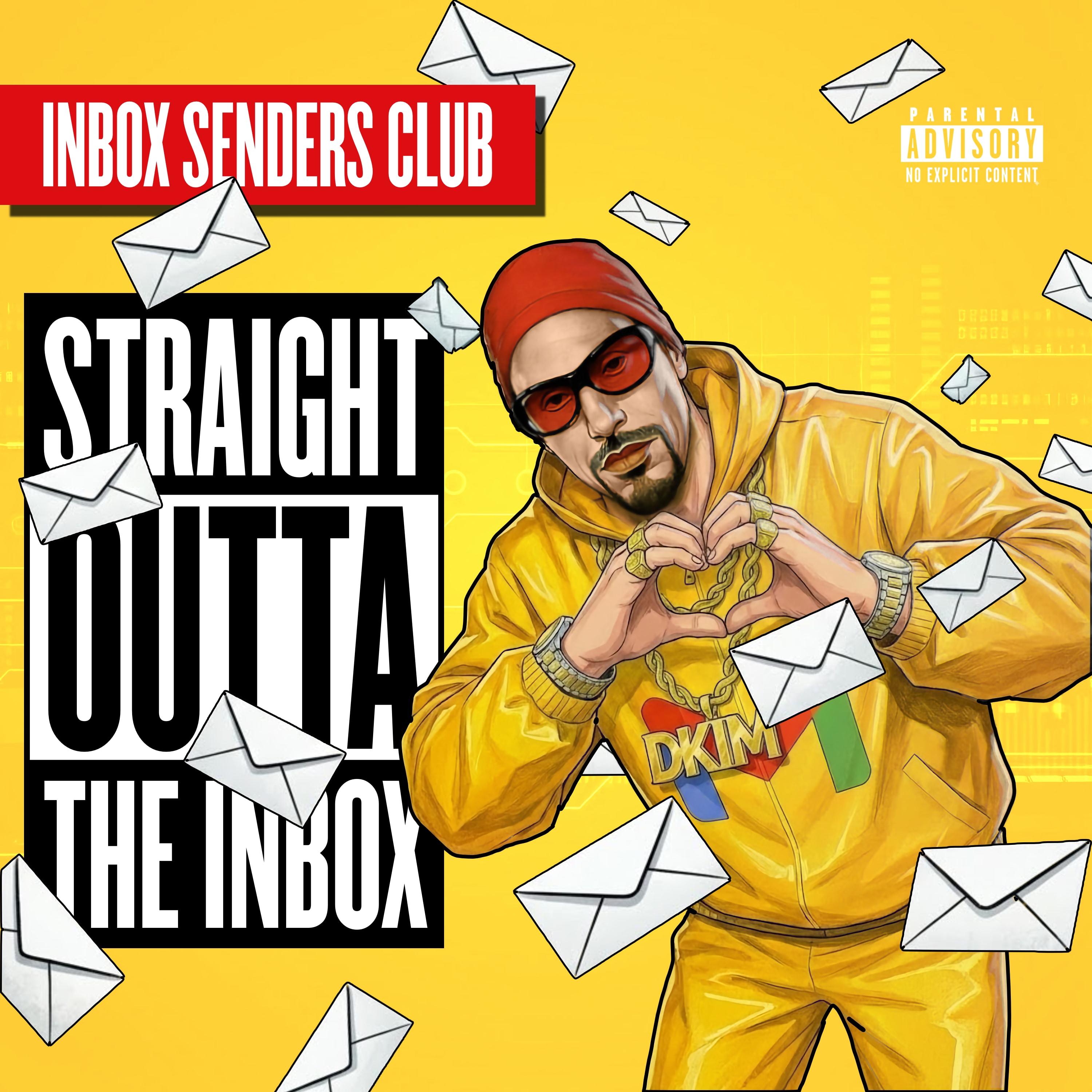
Deliverability Case Study: "The Warm-Up Grind — Patience Over Panic"
This track is Ali G(mail)'s love letter to the most violated principle in email marketing: you cannot just plug in a new IP or sending domain and blast at full volume. Every mailbox provider — Gmail, Yahoo, Microsoft, Apple — treats unknown senders with deep suspicion, and the only way to convert that suspicion into trust is gradual, engagement-led warmup. Ali G(mail) gets the philosophy exactly right: slow rise, steady metrics, and respect for the algorithm.
Here is the technical breakdown of the warmup wisdom embedded in the bars:
Verse 1: Volume Ramping and the Cold-Start Problem
"Yo, me start small — twenty sends on day one / ... / Each day double up, choosin' wisely who me choose / Filters peekin' like 'Who's dat?' — me playin' it slow"
- The Deliverability Context: Ali G(mail) is describing the classic warmup ramp curve. When a brand-new IP or domain starts sending, mailbox providers have zero historical data — no reputation signals, no engagement history, nothing. This "cold start" is exactly why blasting your full list on day one triggers throttling (421 4.7.0 deferrals) or outright rejections.
Correction on the numbers: Twenty sends on day one is too conservative* for most senders. M3AAWG and ESP best practices typically recommend starting at
200–500 sends per day to a highly engaged segment, then doubling every 2–3 days over a 4–8 week ramp. Ali's instinct is right; the figure is just a bit shy.
The Strategy: "Choosin' wisely who me choose"* is the single most important lyric in the verse. Warmup volume should go to your
most engaged subscribers first — opens within the last 30 days, recent clickers, recent purchasers. These users generate positive signals (opens, replies, conversions, no complaints) that teach filters your mail is wanted.
Verse 2: Reputation Signals and Algorithmic Trust-Building
"Dem algorithms sniff vibes like digital police / ... / Warm-up schedule tighter than a personal trainer / ... / Bounce rates drop, opens rise / Filters watch me like 'Bruv, he wise.'"
- The Deliverability Context: Modern filters at Gmail and Microsoft are ML-driven and continuously score sender behaviour. During warmup, every send is a data point. Low bounce rates (under 2%), low complaint rates (under 0.10% per Google's bulk sender requirements), and rising engagement are precisely the trinity that moves your Google Postmaster Tools domain reputation from "Bad" → "Low" → "Medium" → "High."
The Anti-Rush Tactic: "Outlook see dat and say 'Nah fam, you done.'"* — Microsoft's SmartScreen and SNDS (Smart Network Data Services) are particularly unforgiving of cold-start volume spikes. A new IP hitting Outlook/Hotmail with 50,000 messages on day one will land squarely in the Junk folder or get filtered into oblivion, and recovery can take weeks.
Bridge & Verse 3: Domain Maturity and the Long Game
"Warmin' up your domain be like warmin' up pizza... / ... / I monitor me volumes like a hawk on a wire / Adjustin' each send like a DJ on fire / Quality before quantity — dat's da sender creed"
The Deliverability Context: The pizza metaphor is genuinely good pedagogy — warmup is about gradual heat application*, not raw blasting. Ali G(mail) also nails the importance of
active monitoring: warmup isn't a fixed schedule you set and forget. You watch Postmaster Tools, SNDS, and your seed-list
inbox placement (GlockApps, Validity) daily, and if reputation dips or spam rate spikes above 0.10%, you
pause the ramp and hold volume until metrics recover.
The Resolution — IP vs Domain Warmup: One nuance the song blurs: IP reputation and domain reputation are warmed independently. If you're on a dedicated IP with a new sending subdomain (e.g., mail.brand.com), you're warming both simultaneously. Even if you migrate to a new IP later, your domain* reputation travels with you — which is why subdomain strategy matters from day one.
Ali G(mail) closes the track sitting on his "deliverer throne" with a sender score earned through patience, not purchased through volume — exactly how reputation actually works. Booyakasha!
Ready to drop your sending volume from zero to a million overnight? That's the fastest way to get your domain blacklisted before lunch. Just like Ali G(mail) warming up the mic before spitting bars, your sending domain and IP need a careful, gradual introduction to the world's mailbox providers. Here's how to execute a warmup that builds bulletproof reputation instead of burning it down.
Plan the Ramp Before You Press Send
A warmup without a schedule is just spam with extra steps. Mailbox providers track sudden volume spikes as one of the strongest signals of a compromised or malicious sender, so the schedule itself is your proof of legitimacy.
- Start Small, Double Smart: Begin with 200–500 sends per day to your most engaged subscribers, then roughly double the volume every 2–3 days. This pacing gives Gmail, Yahoo, and Microsoft enough data points to build a positive reputation profile without triggering velocity-based filters.
- Plan for 4–8 Weeks: High-volume senders (over 100k/day) should expect a full warmup to take 4–8 weeks to reach target volume. Rushing the timeline — as the song warns, "tryin' to bench-press 200 widout a lift" — almost always results in throttling (421 4.7.0 responses) or outright blocking.
- Warm the Domain AND the IP: A new dedicated IP needs warmup, but a brand-new sending domain or subdomain needs its own ramp too. Domain reputation now outweighs IP reputation at most major providers, so don't assume a clean IP saves a cold domain.
Send to Your Hottest Fans First
Algorithms don't just count your sends — they count who's opening, clicking, and replying. The warmup phase is when engagement signals matter most.
- Lead with Your Top 25%: Send only to subscribers who have opened or clicked in the last 30 days. These users generate the positive engagement signals (opens, clicks, replies, "move to inbox" actions) that teach filters your mail is wanted.
- Suppress Anyone Risky: Pull out unengaged contacts (90+ days inactive), role accounts (info@, support@), and any address that hasn't been validated. One spam trap hit during warmup can undo two weeks of careful ramping.
- Send Transactional and Triggered Mail Early: Welcome emails, receipts, and password resets get exceptionally high engagement. Weaving these into your warmup stream — as the song says, "feed it slow, gentle" — accelerates positive reputation building.
Watch the Filters Watch You
You can't manage what you can't measure. The song's line "I monitor me volumes like a hawk on a wire" isn't just a bar — it's the job.
- Live Inside Google Postmaster Tools: Track your domain reputation (Bad/Low/Medium/High), IP reputation, spam rate, and authentication results daily during warmup. Any drop from "High" to "Medium" is your early warning to slow down the ramp.
- Check Microsoft SNDS: Smart Network Data Services shows your IP status (green/yellow/red) and complaint rate at Outlook/Hotmail. A yellow flag during warmup means pause the ramp for 48 hours and investigate.
- Hold the Line on Complaints and Bounces: Keep spam complaints below 0.10% (Gmail's warning threshold) and hard bounces below 2%. Crossing 0.30% complaints triggers severe filtering and can require restarting the warmup from scratch.
Lock Down Authentication Before Day One
A warmup with broken authentication is a warmup that builds negative reputation. Get the foundation right before the first send leaves the queue.
- SPF, DKIM, DMARC — All Three, All Aligned: Publish a valid SPF record (under the 10-DNS-lookup limit), sign with 2048-bit DKIM, and publish DMARC at minimum p=none with rua reporting. Gmail and Yahoo's 2024 bulk sender rules require all three for senders over 5,000 messages/day.
- Add One-Click Unsubscribe: Implement RFC 8058 List-Unsubscribe and List-Unsubscribe-Post headers from day one. This is mandatory for bulk senders and dramatically reduces the chance that an annoyed recipient hits the spam button instead.
Conclusion
The warmup grind is exactly what the name says: a slow, disciplined climb that converts an unknown domain into a trusted sender. Skip the shortcuts, respect the ramp, and let engagement data — not ego — set your pace.
Your Warmup & Reputation Checklist:
- Publish SPF, DKIM (2048-bit), and DMARC records before your first send.
- Start at 200–500/day and double volume every 2–3 days, planning for 4–8 weeks total.
- Send only to subscribers engaged in the last 30 days during the ramp.
- Monitor Google Postmaster Tools and Microsoft SNDS daily for reputation drops.
- Keep spam complaints below 0.10% and hard bounces below 2% throughout warmup.
- Implement RFC 8058 one-click unsubscribe to comply with Gmail/Yahoo bulk sender rules.
Educational content. Email deliverability evolves rapidly. Platform rules (Gmail, Yahoo, etc.), engagement signals, and ESP behaviours change frequently, and real-world issues often involve conflicting signals, data quality problems, and failure modes that general best practices can’t anticipate. Content on this site is provided for informational purposes only and does not replace a thorough analysis by a qualified deliverability professional.
Terms of Use